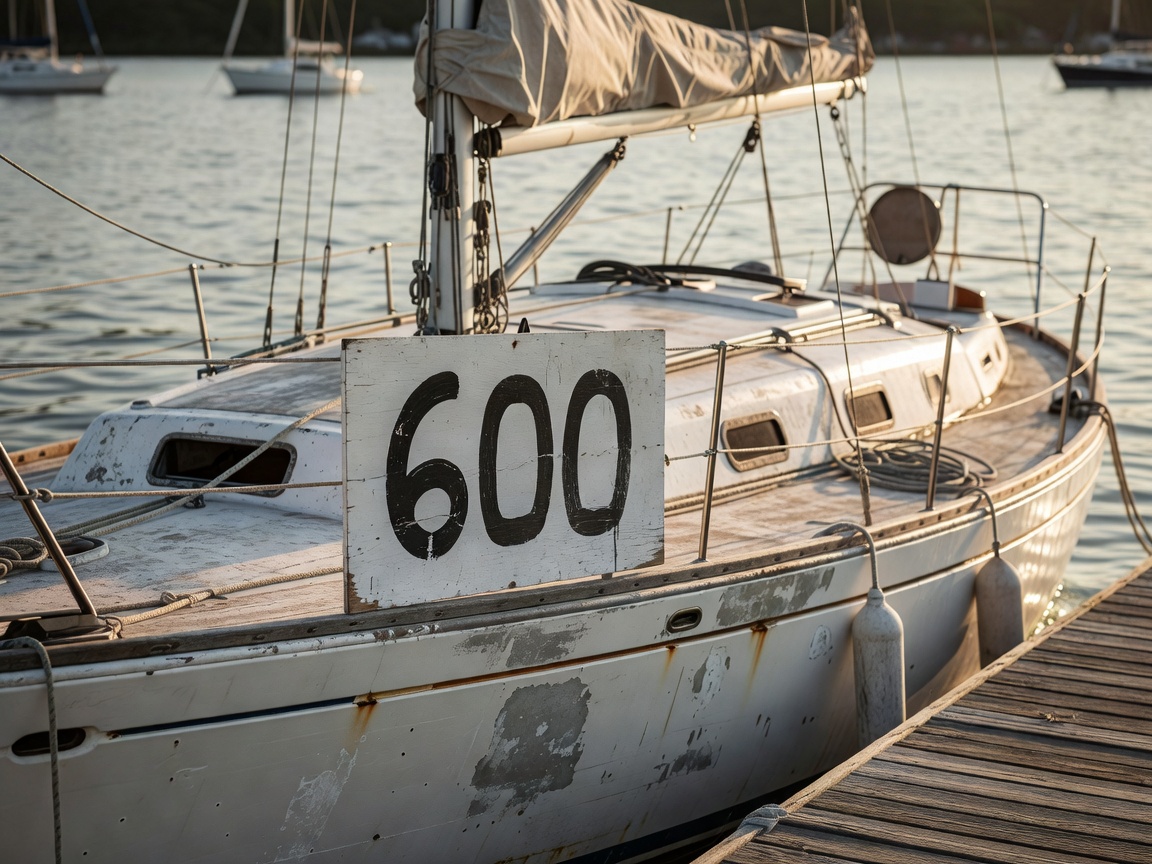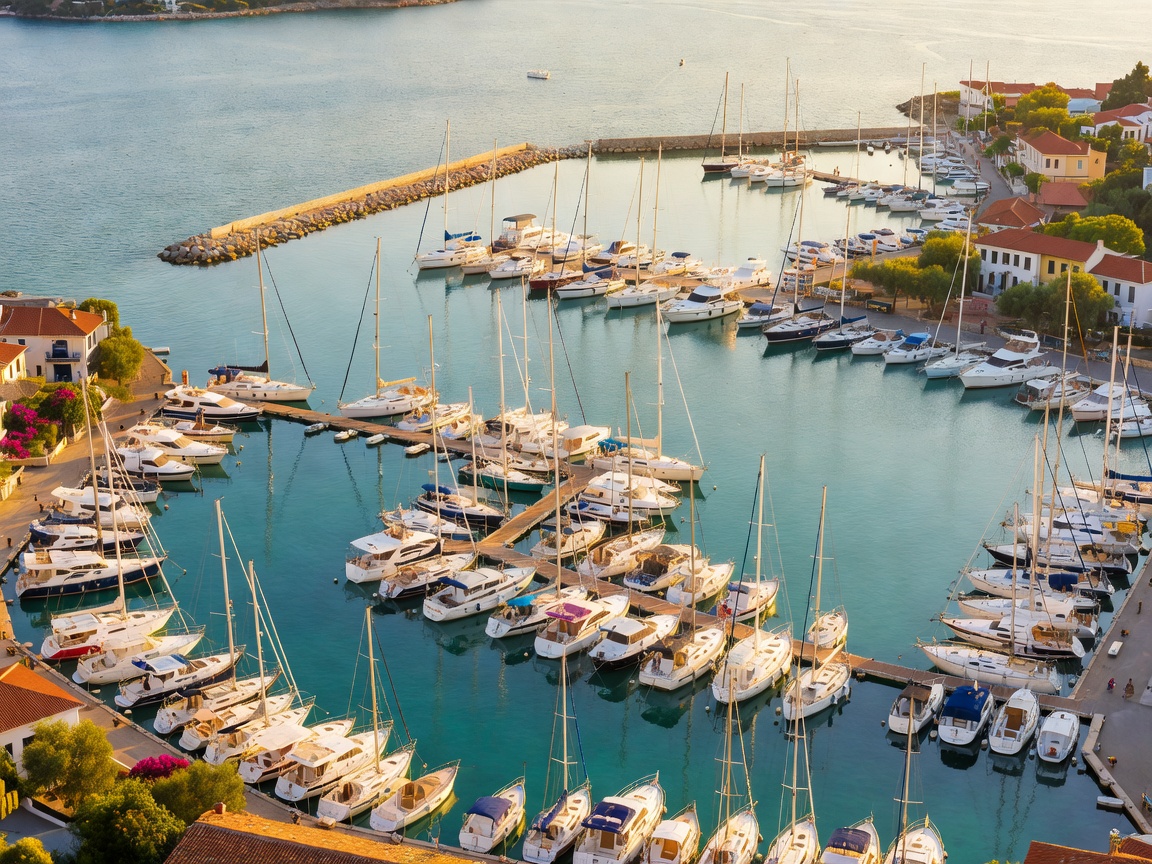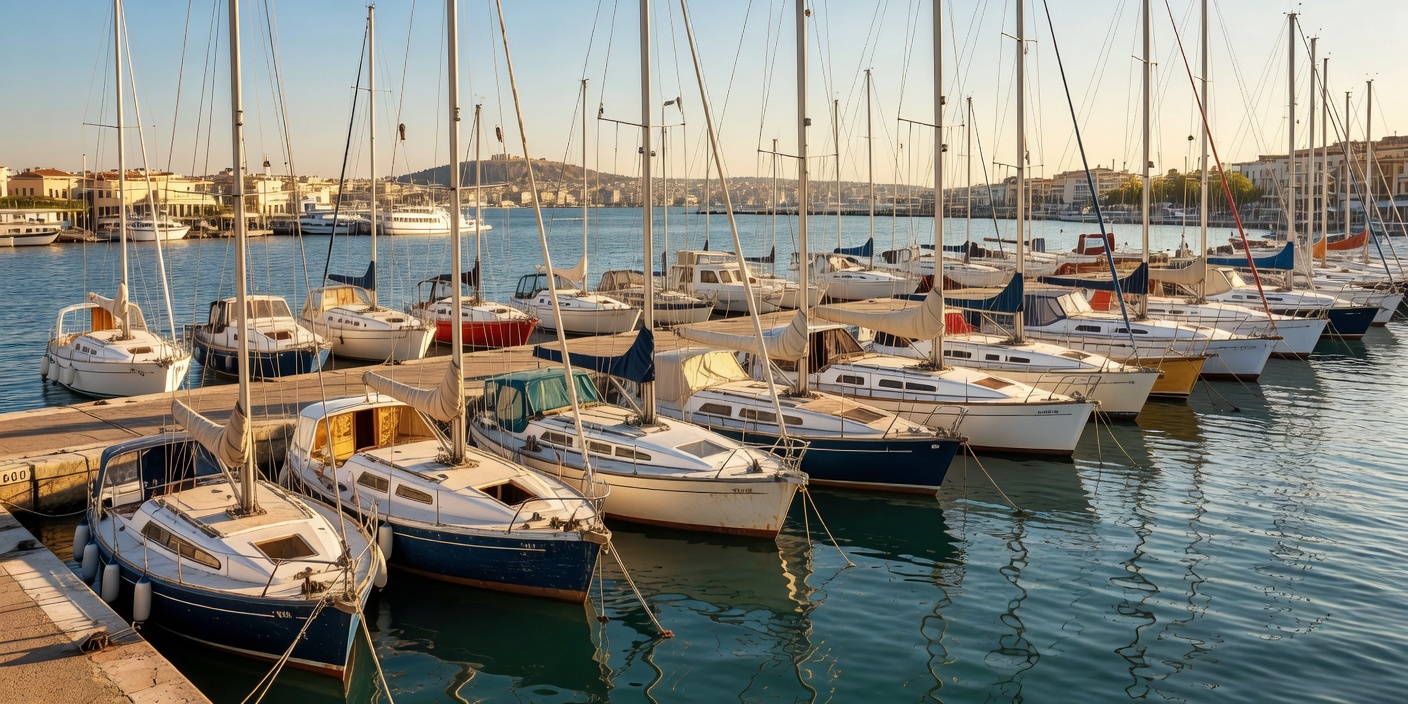
Greece is one of the most active second-hand sailing markets in the Mediterranean, largely because of its large charter industry and a long season that keeps boats in constant use. That activity works in a buyer's favour: there is a steady supply of production cruisers between 28 and 40 feet, and sellers in hubs such as Lefkas, Preveza and Athens compete for attention. But a price on a listing tells you little on its own. The useful question is what a given ceiling realistically buys, and what it leaves for everything that follows.
Think in total budget, not asking price
Before comparing boats, split your figure into two parts: the purchase and the first-year fund. The first-year fund covers the survey, a haul-out for inspection, registration transfer, insurance, a berth or hard-standing contract, and the repairs almost every survey uncovers. Experienced buyers routinely hold back a meaningful share of their total for this, and the older the boat, the larger that share should be. A €75K budget spent entirely on a €75K boat is a purchase with no safety margin.
Under €50K: older, smaller, full of character
At the lower end, expect production boats from the 1980s, 1990s and early 2000s, usually between 28 and 34 feet. Designs that commonly appear in Greek listings include older Beneteau Oceanis and First models, Jeanneau Sun Odyssey boats, earlier Bavaria cruisers, Gib'Sea and older Dufour designs. Many were built in France or Germany and have spent decades in the Mediterranean.
These boats can be excellent value for couples and small families who want to cruise the Ionian or the Saronic in summer. The trade-off is that major systems — engine, standing rigging, sails and electrics — may be near or past the end of their service life. A boat in this band with a recent engine or rig replacement, backed by invoices, is often worth more than a cosmetically smarter boat without them.
€50K to €75K: the sweet spot for coastal cruising
This band widens the choice considerably. Production cruisers of 32 to 37 feet from the late 1990s to the late 2000s become realistic, often with two or three cabins, a separate shower, and upgrades such as a chartplotter, bow thruster or furling mainsail. Ex-charter boats begin to appear here, typically older fleet units that have since had one or more private owners.
For many buyers this is where age and condition balance best. You can afford to be selective, walk away from boats with unresolved issues, and still find something suited to Greek conditions: good cockpit shade, adequate water tankage and ventilation that copes with a hot July.
€75K to €100K: newer, larger, more cabins
Near the upper ceiling, 36 to 40 foot boats from the late 2000s and 2010s come into range, including many three-cabin ex-charter layouts from Bavaria, Beneteau, Jeanneau, Dufour and Elan. These suit families or owners who plan to host guests, and some buyers place them in charter management to offset running costs.
The main risk here is paying for size you do not need. A larger boat raises berth fees, antifouling area, sail replacement costs and insurance, so unless you genuinely need the extra cabin, a well-kept 34-footer can make more sense than a tired 40-footer at the same price.
| Budget band | Typical length | Typical build era | Common history | Watch closely |
|---|---|---|---|---|
| Under €50K | 28–34 ft | 1980s–early 2000s | Private ownership, sometimes charter long ago | Engine age, rigging, deck leaks, osmosis |
| €50K–€75K | 32–37 ft | Late 1990s–late 2000s | Private and older ex-charter | Sails, electronics, upholstery, batteries |
| €75K–€100K | 36–40 ft | Late 2000s–2010s | Frequently ex-charter | Charter wear, engine hours, grounding repairs |
Buying at the lower end: pros and cons
Pros
- Lower capital at risk if ownership does not suit you
- Simpler systems that are easier to maintain yourself
- Smaller boats cost less to berth, lift and antifoul
- Plenty of choice in the Ionian boatyards
Cons
- Major systems may need replacement soon after purchase
- Less interior volume and tankage for long summers
- Resale can be slow if the boat is dated
- Survey findings can quickly erode the saving
Costs that never appear on the listing
- An independent survey, ideally with a lift-out so the underwater hull, keel and rudder can be inspected.
- Registration transfer or re-flagging, plus any agent fees involved.
- Confirmation of EU VAT status, which should be documented before you agree a price.
- The Greek cruising tax (TEPAI) and insurance before you sail.
- A berth or hard-standing contract for your first season.
- Safety equipment servicing: liferaft, flares, lifejackets and fire extinguishers.
Each of these is covered in detail in our guide to marinas and ownership costs.
How to build a shortlist
Consider two neighbouring bands rather than one, because a well-kept boat just below your ceiling often beats a neglected one at the top of it. Compare at least three boats of similar size before deciding, and plan viewings geographically: Lefkas, Preveza and Corfu sit close enough together that a single trip can cover the Ionian cluster, while Athens and Crete usually need separate visits. Finally, decide how you will use the boat — weekends, long summers or occasional charter — and let that, not the listing photos, choose the band.