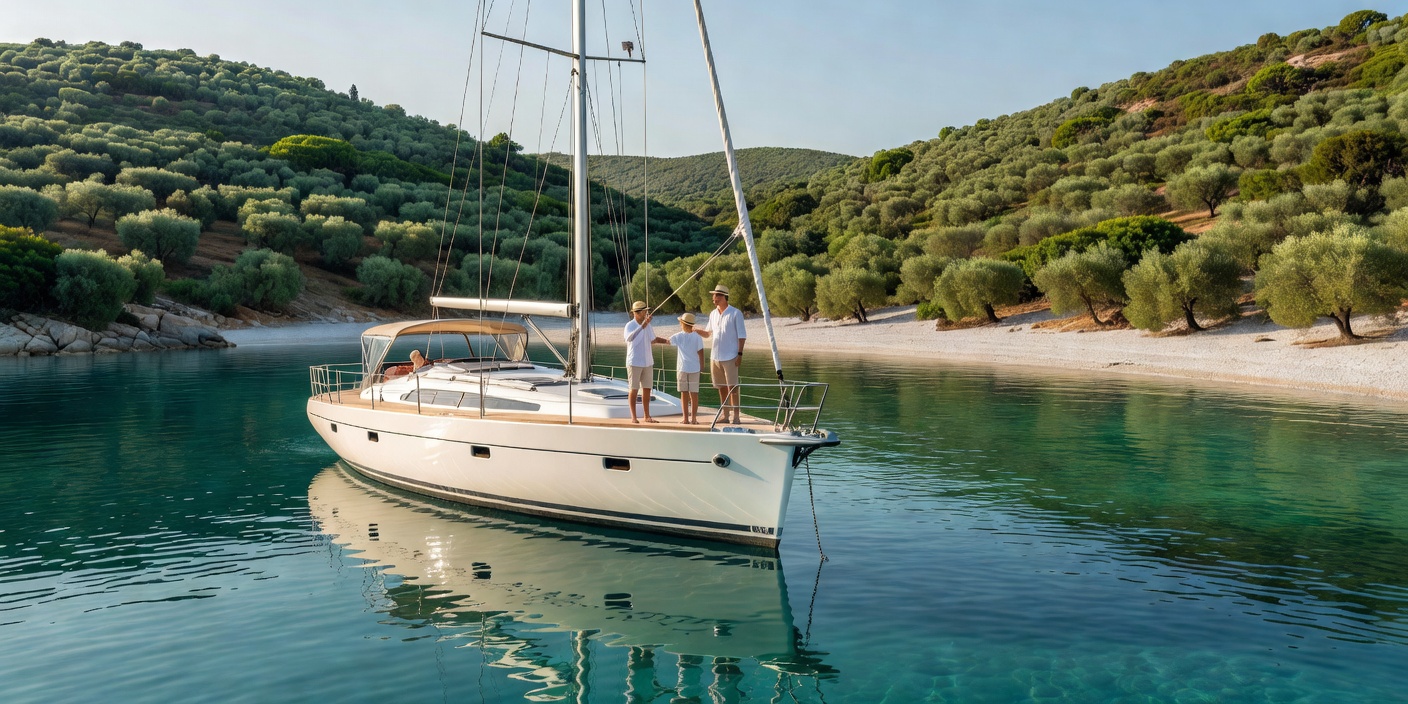
Families make up a large share of buyers in the affordable Greek market, and their needs differ from those of racing sailors or long-distance voyagers. The typical family crew is one confident sailor, a partner who may be newer to boats, and children of varying ages. That crew needs a boat that is easy to handle, comfortable in the heat, safe for small people moving around the deck, and forgiving when plans change because the wind picks up.
Why size matters less than you think
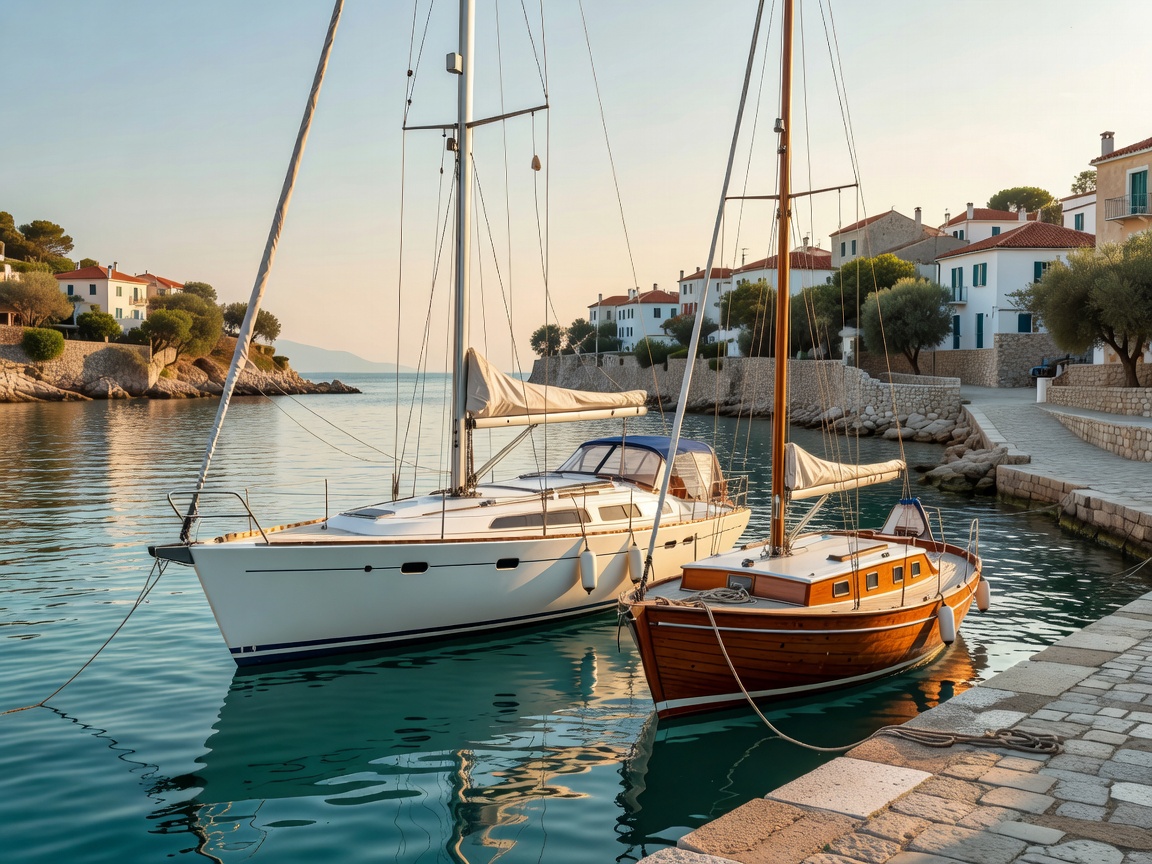
Most families are well served by a boat between 30 and 38 feet. At this size berths are cheaper, sails are lighter to handle, and docking is far less stressful — important in Greek harbours, where Mediterranean stern-to mooring with lazy lines or your own anchor is the norm. A smaller boat also fits into more town quays in peak season, when larger yachts are turned away. What matters more than length is how the space is arranged and how easily two people can sail it.
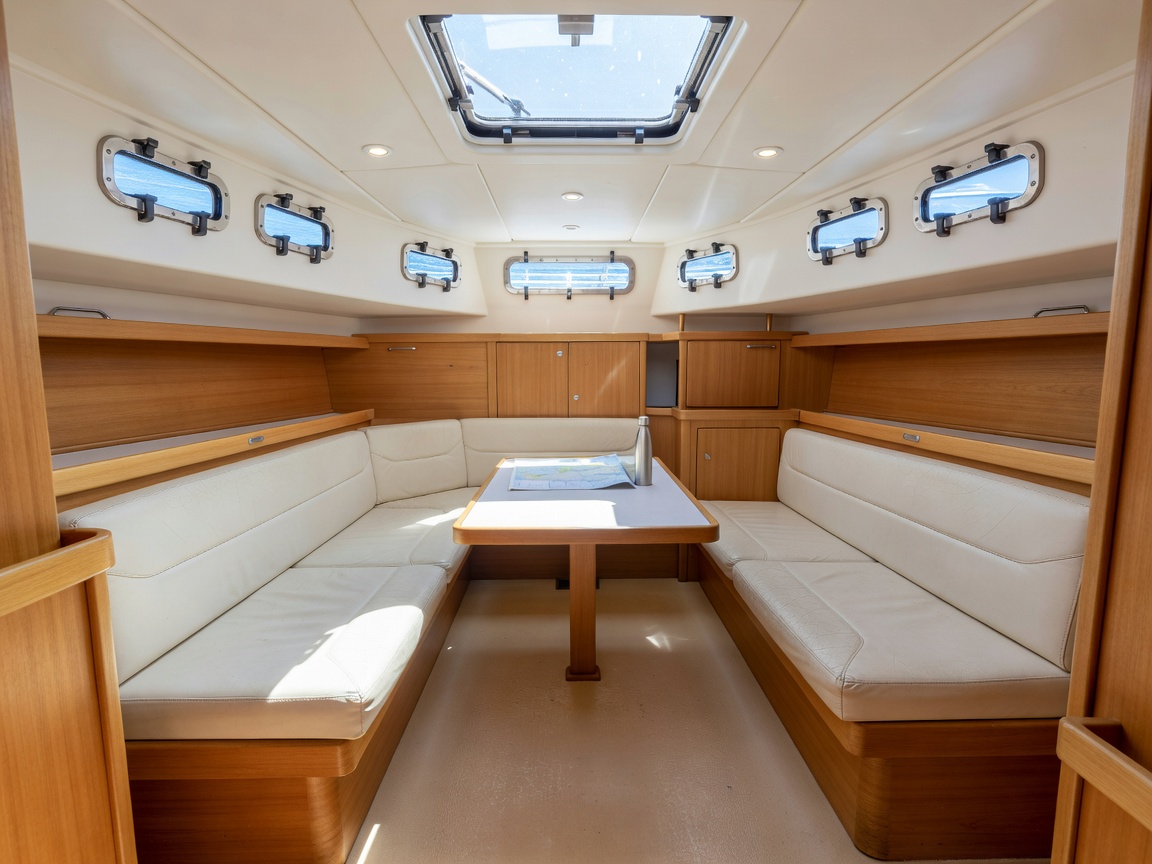
Two cabins or three?
| Layout | Suits | Trade-off |
|---|---|---|
| Two cabins, one head | Couples with one or two young children | Less room for guests, but a large cockpit locker for toys and kit |
| Three cabins, one head | Families of four or five | Smaller aft cabins and a queue for the bathroom |
| Three cabins, two heads | Families who host friends | More plumbing to maintain and less stowage |
Teenagers often value a cabin of their own more than extra saloon space, while families with toddlers tend to prefer a large aft cabin they can share. Think about how your family will grow over the years you expect to own the boat.
Keel choices for Greek anchorages
Most used production boats in Greece have a fin keel, which sails well and points high. Many popular models were also offered with a shoal-draft option, which can be valuable in shallow bays around Lefkas, Meganisi and the Ambracian Gulf, at the cost of some upwind performance. Lifting and twin-keel boats are less common on the Greek market than in northern Europe, so if you want one you may have a smaller selection. Whatever you choose, check the draft against the harbours and anchorages you plan to use.
Features that make family sailing easier
- Furling sails. In-mast or in-boom furling makes reefing simple for a small crew, though it can reduce sail performance and needs careful maintenance.
- Self-tacking jib. Tacking becomes a one-person job, ideal when the second adult is busy with children.
- Electric windlass. Anchoring several times a day is far easier without hauling chain by hand.
- Bow thruster. Useful for stern-to docking in crosswinds, though not essential on smaller boats.
- Bimini and sprayhood. Shade is not optional in a Greek summer.
- Swim platform and ladder. A drop-down transom turns the boat into a floating beach.
- Guardrail netting and jackstays. Simple, inexpensive safety upgrades for young crew.
- Refrigeration and solar. Cold drinks at anchor without running the engine.
Design families worth viewing
Among the boats that commonly appear in Greek listings, families often look at the Beneteau Oceanis 31, 34 and 37, the Jeanneau Sun Odyssey 32i, 33i and 36i, the Bavaria Cruiser 33 and 34, the Dufour 335 and 350 Grand Large, and the Hanse 315 and 345. These are starting points for comparison, not recommendations: the condition, equipment and history of an individual boat matter far more than the model name.
Pros and cons of a smaller family boat
Pros
- Lower berth, insurance and maintenance costs
- Easier stern-to docking with a small crew
- Access to more town quays and small harbours
- Lighter loads on sheets, halyards and anchor gear
Cons
- Less privacy for older children and guests
- Smaller water and fuel tanks
- Less comfortable in a steep sea
- May be outgrown as the family changes
Where to cruise with children
The Ionian — Corfu, Preveza, Lefkas and the islands beyond — is widely regarded as the gentlest Greek cruising ground, with short hops between sheltered harbours and a typically moderate afternoon breeze. From Athens, the Saronic Gulf offers easy passages to islands such as Aegina, Poros and Hydra. Crete and the wider Aegean are more demanding: the summer meltemi can blow strongly for days in July and August, and passages are longer. These are better suited to experienced crews or shoulder-season cruising.
A family safety checklist
Before your first season, make sure every child has a correctly sized lifejacket and harness, fit jackstays and netting, practise a man-overboard recovery with the whole crew, carry a well-stocked first-aid kit, and teach older children how to use the VHF radio. Then read our guide to marinas and ownership costs to choose a family-friendly base.